Abandonment and Decay of the Ramsay Summer House
To the LighthouseThe Abandonment and Decay of the Ramsay Summer House is the years-long deterioration of the family’s empty seaside home, where the loss of its occupants becomes legible in neglected rooms and encroaching nature. Its stillness is not simple peace: domestic objects decay, living creatures take possession, and war and bereavement register in a house no longer organized around family life. The home comes close to vanishing altogether, but the prospect of the family’s return sets a difficult restoration in motion.
From a Lived-In Home to an Empty House
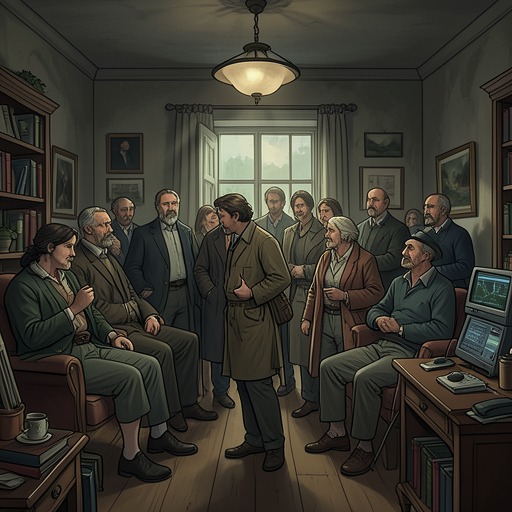
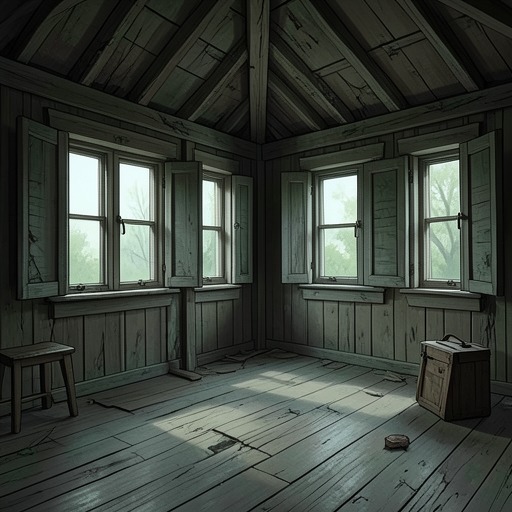
The house’s abandonment follows the departure of the family and the death of Mrs Ramsay. What had been a home filled with people and their movements is left locked and unoccupied. Their remaining possessions preserve traces of use: shoes, a shooting cap, faded clothes, and furniture and household items no longer maintained. Light continues to move through the rooms, while wind and birds cross them, but these motions do not replace the activity that once gave the objects their place in family life.
This emptiness has its own deceptive beauty. In the bedroom, stillness and loveliness seem to hold together, even as the sea air and wind repeatedly pose the possibility of fading and perishing. The silence absorbs distant sounds, interrupted only occasionally by a sudden noise or movement of the shawl left in the room. Mrs McNab eventually enters to open the windows and dust, but her visits do not amount to sustained care; the house remains exposed to the long work of neglect.
Nature and the Work of Decay
As the years pass, nature takes the rooms and grounds without regard for their former domestic purpose. The saucepan rusts, the mat decays, and toads enter. Swallows nest in the drawing-room, rats carry things away, and plaster falls from the walls. Plants spread through the garden: long grass overtakes the lawn, while poppies, artichokes, roses, and cabbages grow in unruly abundance. What had been human arrangements of rooms, belongings, and cultivated space are steadily loosened and displaced.
The process is gradual rather than a single catastrophe. A weed’s tapping at the window becomes a more persistent disturbance; the roof and interior remain vulnerable as damp and weather work on them. The narrative imagines what would follow if the house were left beyond repair: trespassers might shelter in its ruins, growth would cover the path and windows, and only a scrap of china or a poker among the plants would remain to show that anyone had lived there. The house is poised between continued decay and the loss of its identity as a house at all.
Bereavement and the War in the Landscape
The empty rooms carry the consequences of family loss. Mrs McNab finds Mrs Ramsay’s clothes still in the cupboards, including the old grey gardening cloak, and household belongings left as if their owner might return. She has heard that Mrs Ramsay died suddenly in London, years earlier. Her memories of Mrs Ramsay coming up the drive with the washing give the abandoned objects a human association, while the untouched clothes make that remembered presence inseparable from absence.
The war enters the house’s interval of abandonment through both an abrupt report of death and changes to the world outside. A shell explosion in France kills twenty or thirty young men, including Andrew Ramsay; his death is instantaneous. The narrative places this news beside the ordinary sequence of nights and seasons at the unoccupied house. Along the shore, an ashen-coloured ship and a purplish stain on the sea interrupt the beauty of sunsets, dawn, and fishing boats. The landscape cannot be treated as a guarantee of comfort or as a reflection that completes human feeling: nature sees misery and suffering with the same composure as beauty. The home’s decay thus unfolds beside, rather than apart from, a wider human history that the sea and weather do not explain or console.
Mrs McNab and the Threat of Disappearance
Mrs McNab’s visits reveal the practical burden of the house’s neglect. She is alone with more work than she can manage: books have grown mouldy, plaster has fallen, a rain-pipe is blocked, and clothes remain in cupboards. The family has sent money but, in her view, has not come or written; she doubts that one person of her age and strength can put the place in order. Her departure leaves the house locked once more, with the damage continuing unchecked.
At its most desolate, the house resembles a shell left to fill with salt and weather. Its deterioration is joined to a broader passage of time in which storms and fine weather follow one another while night and day seem to run together. The Lighthouse beam enters the rooms only briefly, passing over the neglected interior without disturbing its indifference. Nature’s continued growth, the beam’s passing light, and the house’s accumulating ruin do not restore the family world; they make its absence more evident.
The Return of Human Labor
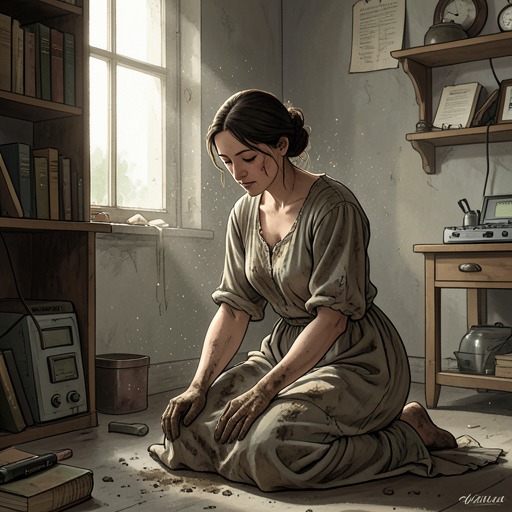
The house avoids the imagined final collapse when a message from one of the young women says that the family may come for the summer and asks for preparations. Mrs McNab and Mrs Bast return to the work, despite their age and aching legs. They mop and scour, retrieve household objects, and bring books and furniture back into use. George, Mrs Bast’s son, catches the rats and cuts the grass; builders are also brought in. Restoration is collective, physical, and laborious, not a sudden return to the home’s former condition.
That labor rescues particular things from disappearance: Waverley novels and a tea-set are recovered, and a brass fender and steel fire-irons are returned to the air and light. The sequence marks a change in the house’s fortunes, but it does not cancel the years of decay or the deaths that occurred during them. Rather, the possibility of the family’s return interrupts the house’s movement toward ruin. The abandoned home stands at the meeting point of domestic memory, natural indifference, and human effort: vulnerable to being swallowed by time, yet still capable of being prepared for life again.